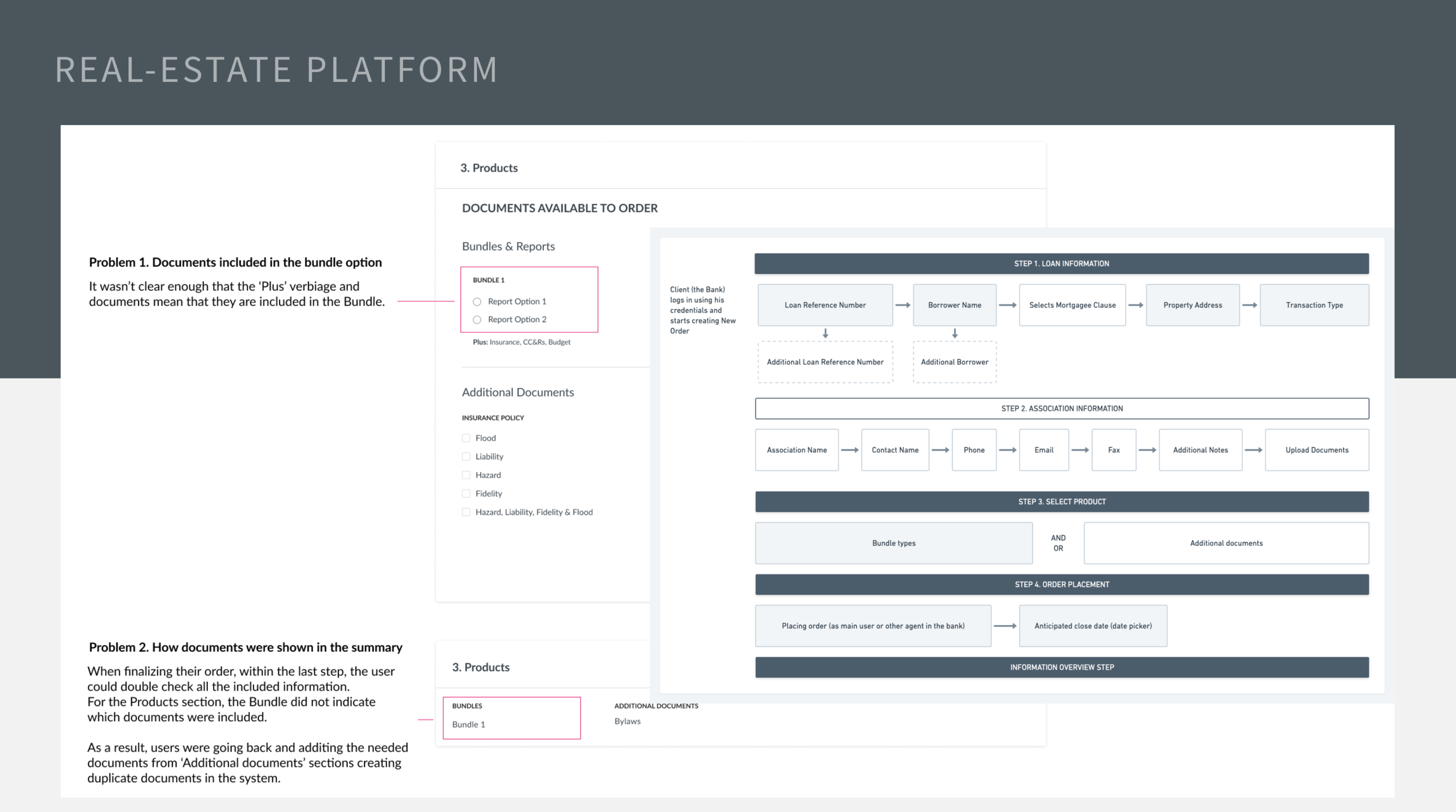
Real-Estate Platform. Enhancing Order Creation
Project overview
In summer 2020 I joined a real-estate project that was a part of a big US company that operated in the financial services industry - Corelogic (CLGX). I joined the team of full-stack engineers, business, data analysts, and a product manager who have already been working on a project for 4 years on average.
The project was a B2B real estate data aggregator and was collecting data about the properties for banks to make a decision on whether to issue a loan.
I was hired to enhance processes as the volume of orders increased significantly due to the COVID-19 pandemic. After talking to stakeholders, major identified issues were related to the time agents spend ordering documents and a large number of duplicate orders in the system. Click here to read the case about Ordering document process enhancements.
Project kick-off
I started by talking to a person who was updating and maintaining an internal database of properties and condo associations/management companies to understand how the duplicates were created.
In a nutshell, a bank requests a set of documents about the property and places this order in the system. We take the address to find the matching property within our system to define associated condo association/management company that runs it. This autolinking process saves time as agents who order documents, have all the necessary information to contact the relevant organization and request the needed documents.
Existing addresses in the database had a standardized format according to the USPS. When the client entered an address that did not follow the standard format (str was written as ‘street’ or ‘st’, for example), the system could not find it and, consequently, link it to the company.
I started by mapping the current flow of the order placement process which has 4 steps and a final information overview step to proofread all the data.
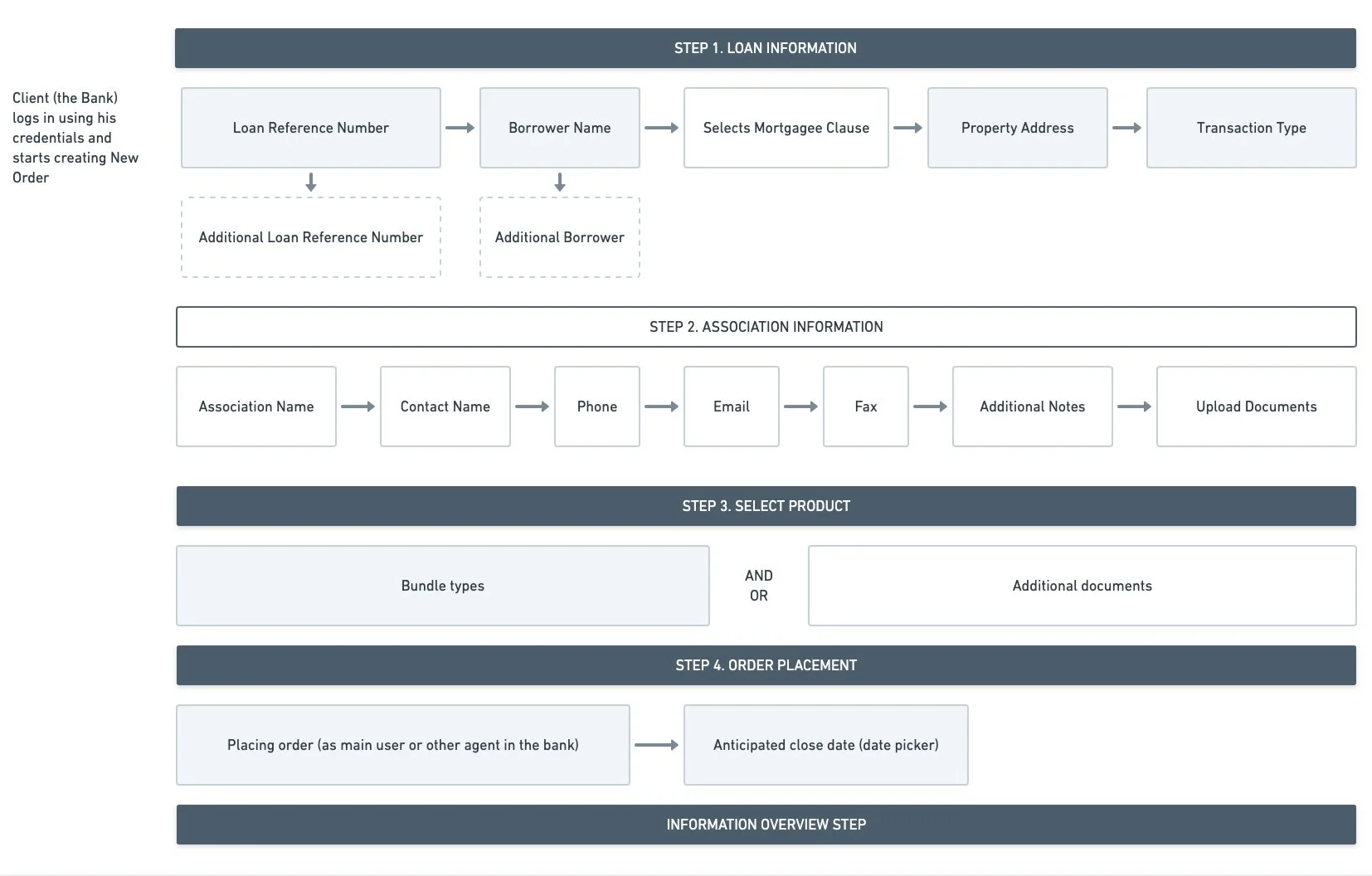
Then I reviewed survey results the banks were filling in on a regular basis, talked to account managers whose work was to supervise banks, and joined several sessions with them to understand how they submit orders. I also gathered data about the number of duplicates in the system.
Major Findings
The research showed that two types of duplicates were created while placing the order:
— Duplicate addresses. While clients were filling in the address they were using different abbreviations and, thus, the address submitted wasn’t found in the database to be linked to the Association. That duplicate triggered the whole workflow where agents had to manually match the address with the one that existed in the database either to correct the data or create unnecessary duplicated company.
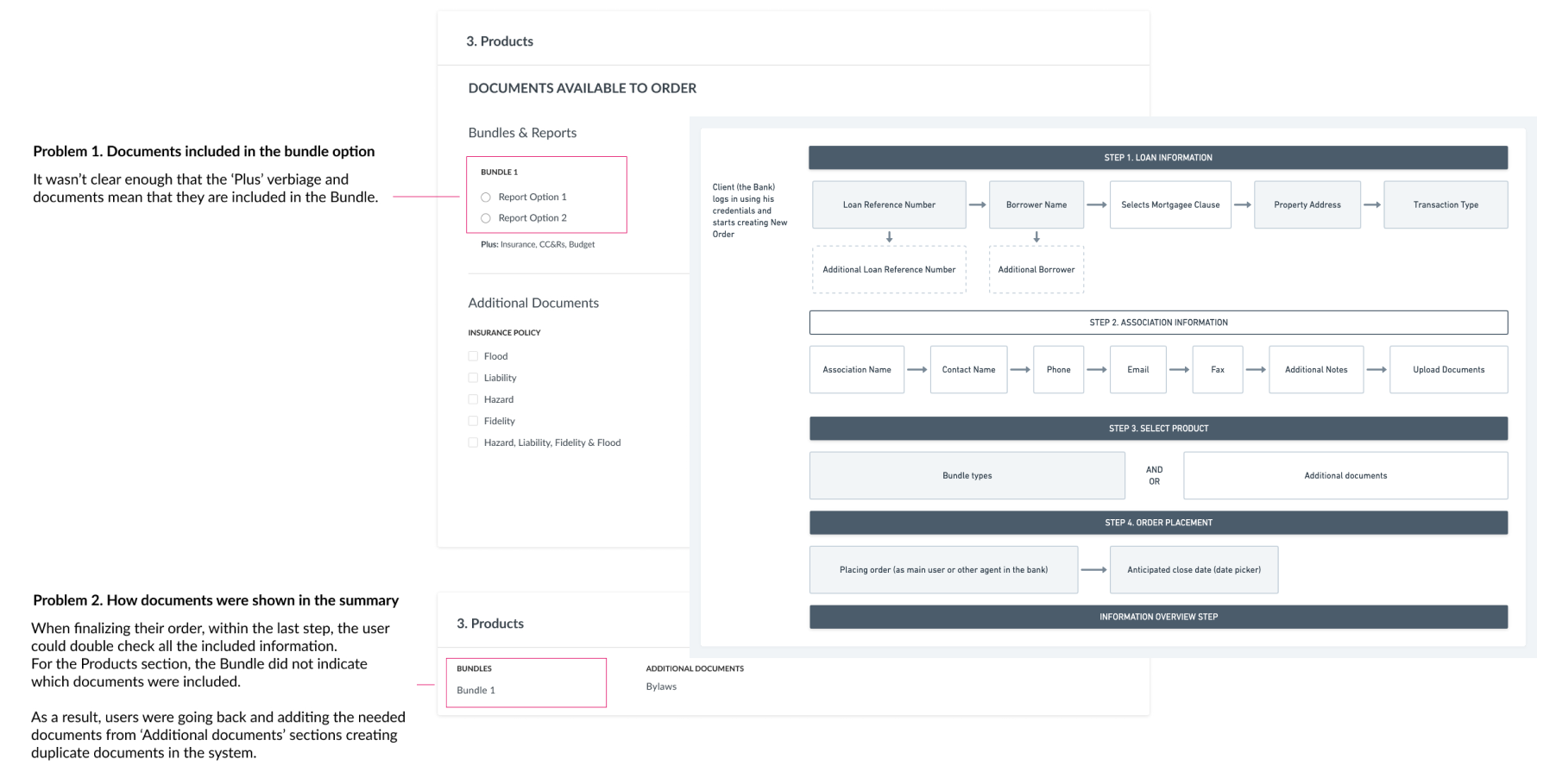
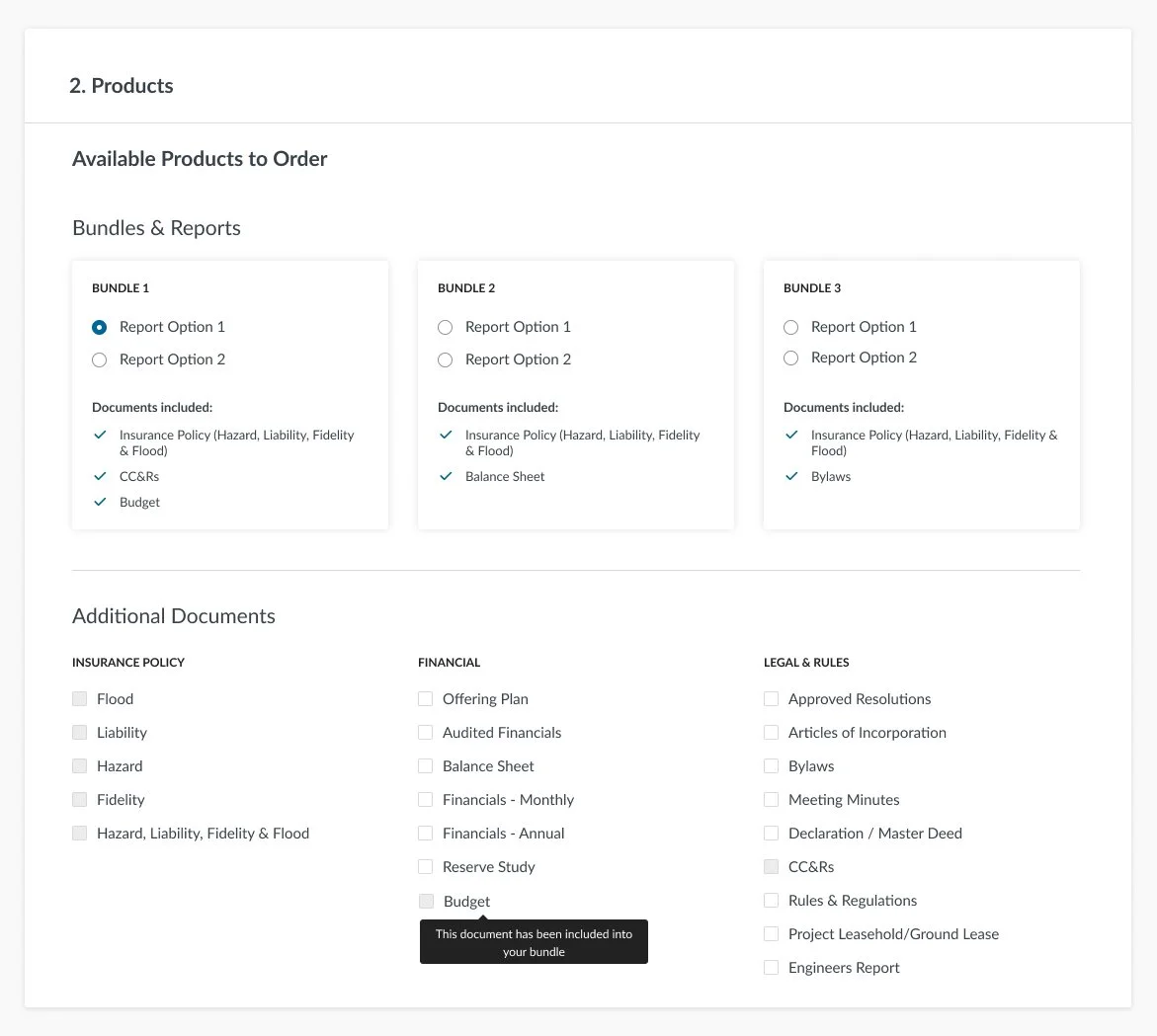
— Duplicate documents. When the client was selecting offered products, he was choosing a type of bundle and additional documents if needed. Each bundle consisted of a specific report (the client will choose from 2 options) plus additional documents (same for both reports). Client sessions and survey results showed that it wasn’t obvious which documents were included in the bundle. As a result, the client edited a document to the order that had been already included in the bundle. And the system allowed him to do this. In the end, duplicate document requests were created in the system.
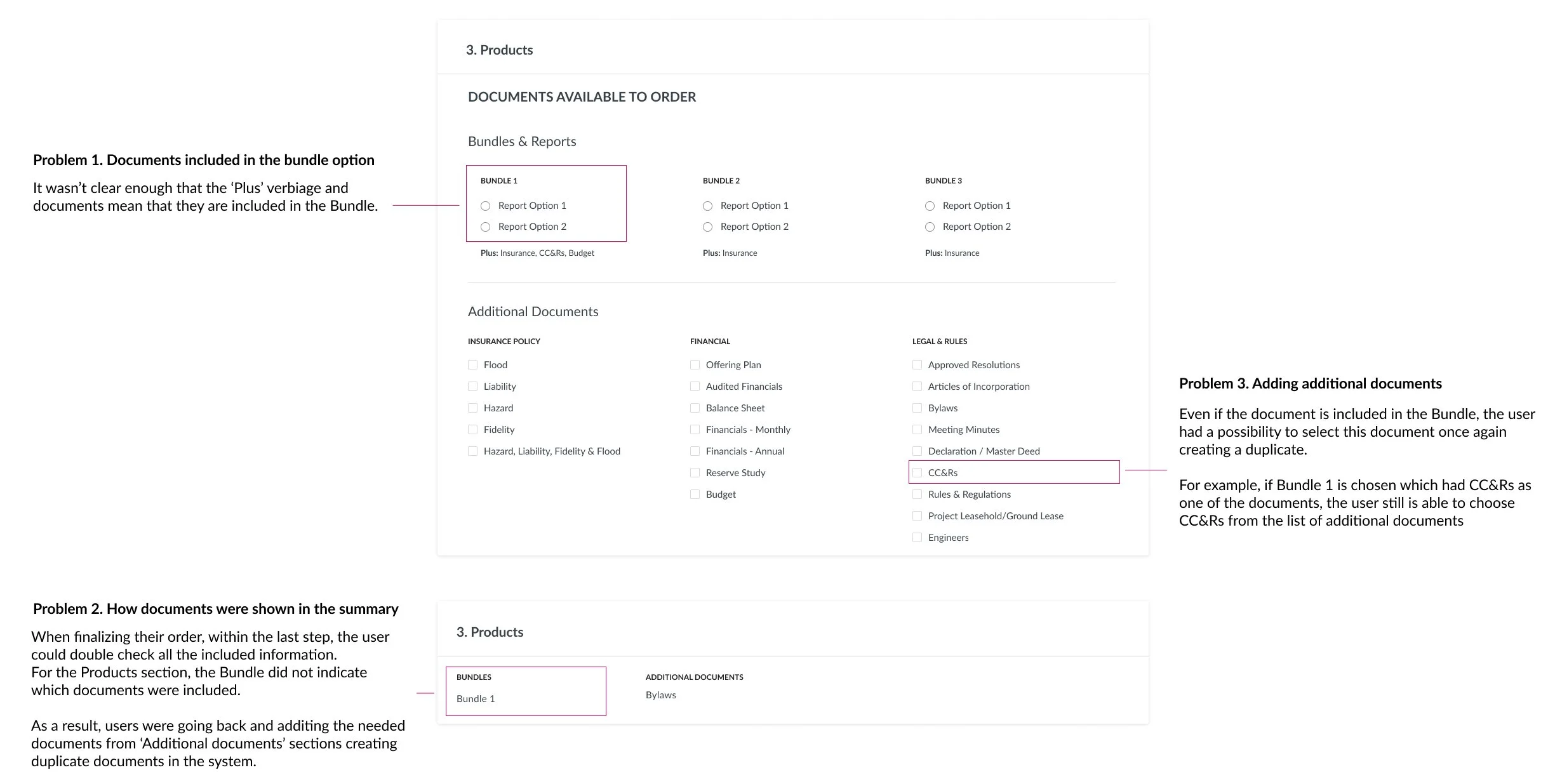
Duplicate documents analysis
Duplicate Documents. Solution
For the Products section, I made all 3 Bundles more visible, including the list of documents for each of them. When a specific Bundle was chosen, in ‘Additional Documents’ section documents that were already in the report, were disabled to prevent choosing them again. A message was displayed when the user hovered over the option that’s been included in the bundle.
I also showed the list of documents that were included in the bundle in an information overview step where the client was checking everything before submitting the order.
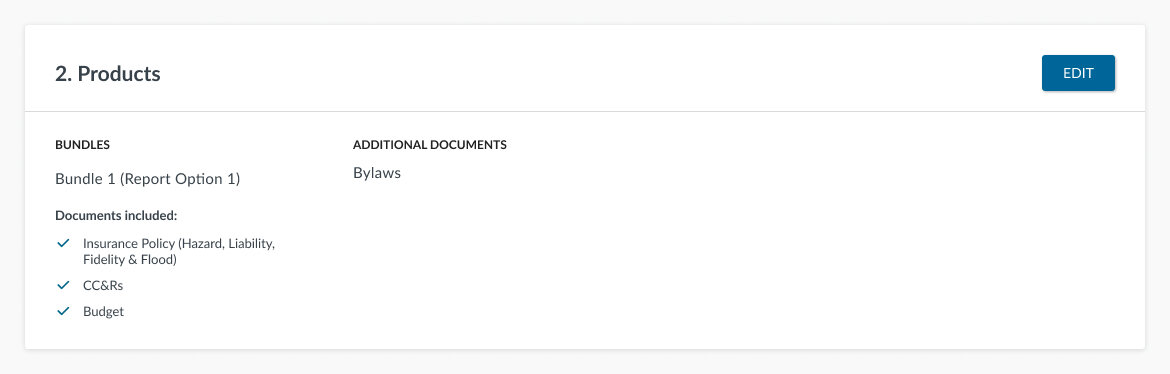
After implementation, the results showed that orders received in the system did not have any duplicate documents, and account managers shared clients’ feedback that there were no confusion about what is included in the order.
Duplicate Addresses. Solution
The next step was to fix duplicate addresses in the system by placing orders with standardized addresses.
I was working closely with engineers for this task to understand how the address standardization process will work. After the user enters the property address, the system will use USPS and ECLIPSE third-party services to create a standardized form of address. After talking to engineers and product manager, I created several cases:
— property is a new condo and the address does not exist in the databases
To be continued…